
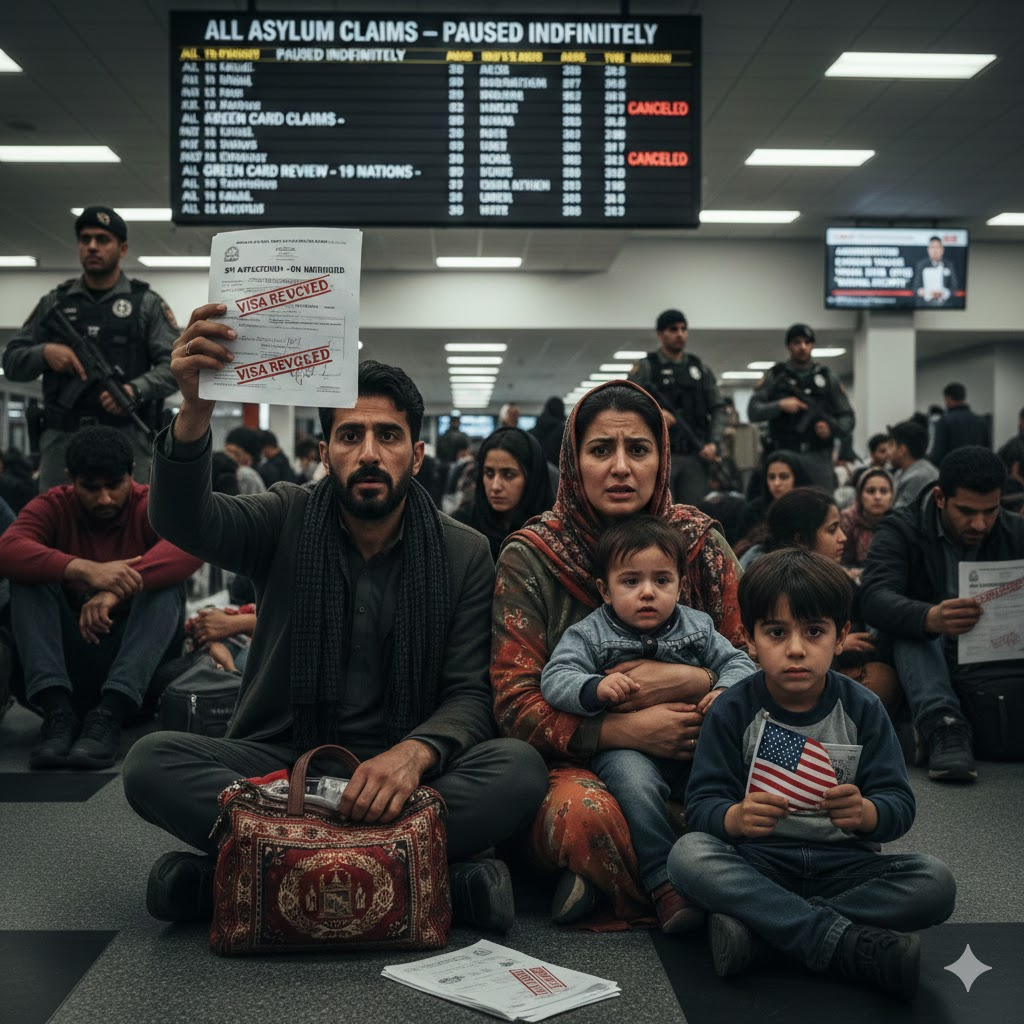
The nation’s immigration landscape is undergoing a dramatic and rapid shift, driven by heightened security concerns following the recent tragic shooting of two National Guard members in Washington, D.C. The administration is moving aggressively to implement a series of sweeping new restrictions and reviews that are intended to curtail new migration and retroactively re-examine the status of thousands of current legal residents.
Proposed Expansion of the Travel Ban
One of the most significant and immediate policy changes under consideration is a major expansion of the existing travel ban.
- Broadening the Scope: The administration is reportedly considering expanding its current travel ban—which restricts or bars entry from 19 countries—to include approximately 30 to 32 nations. While the full list has not been formally announced, the Department of Homeland Security has indicated the new additions will be released soon.
- The Rationale: Officials have explicitly linked the crackdown to the D.C. shooting, which was allegedly carried out by an Afghan national who entered the U.S. in 2021 as part of the Operation Allies Welcome program. The administration’s rhetoric has focused on the need to prevent “foreign invaders” and “killers” from entering the country and to ensure the proper vetting of all entrants.
Halt on Asylum and Scrutiny of Green Cards
Beyond the travel ban expansion, federal agencies have been directed to implement a freeze on several long-standing legal immigration processes, creating immediate uncertainty for applicants across the country:
- Asylum Decisions Halted: U.S. Citizenship and Immigration Services (USCIS) has ordered an indefinite pause on all asylum decisions, both for new applications and pending cases. The agency stated that this is necessary to ensure every applicant is “vetted and screened to the maximum degree possible.” This move affects nearly 1.5 million pending asylum cases.
- Targeting Afghan Nationals: Following the alleged shooter’s background, the administration has halted all visa and immigration processing for Afghan nationals, including those seeking the Special Immigrant Visa (SIV) that is often utilized by individuals who assisted U.S. military and government forces during the conflict. This sudden pause has left thousands of allies and their families in immediate limbo.
- Green Card Re-examination: Officials have ordered a “full-scale, rigorous reexamination” of all approved and pending Green Card (permanent residence) applications for individuals from the 19 countries currently on the travel ban list. This retroactive scrutiny marks a significant policy shift that targets people who had previously been vetted and legally approved for residency.
The Rhetoric of “Reverse Migration”
The policy changes are being framed by the administration in the context of “reverse migration.” This non-legal term, frequently used in social media posts by the President, suggests a broader agenda that includes:
- A “permanent pause” on migration from “all Third World Countries.”
- A pledge to terminate federal benefits for non-citizens.
- The removal of anyone “who is not a net asset to the United States” or who is “incapable of loving our Country.”
Legal and Humanitarian Implications
The rapid implementation of these policies has drawn immediate condemnation from legal and human rights advocates:
- Legal Challenges: Lawyers are mobilizing to challenge the legality of the asylum pause and the proposed travel ban expansion, arguing that a broad, nationality-based ban may violate the non-discrimination provisions of the Immigration and Nationality Act and other constitutional protections.
- Collective Punishment: Advocacy groups have characterized the actions, particularly the halt on Afghan visas, as a form of collective punishment that unfairly targets entire communities for the alleged actions of a single individual. For those with approved Green Cards or pending asylum cases, the uncertainty is immense, with many fearing potential deportation back to dangerous or hostile home countries.
The debate over national security and immigration vetting has now placed the statuses of countless current and prospective immigrants—including U.S. allies and asylum seekers—at the center of a national policy crisis.
Would you like to focus your article on the human impact of the policy changes, the legal arguments being raised, or the political motivations behind the administration’s actions?







Leave a Reply