

From Tragedy to Policy: The DC Shooting and a New Immigration Pivot
By Steven Fitzpatrick
WASHINGTON — A quiet holiday week in the capital has turned into a defining moment for the Trump administration’s second year. Following the fatal shooting of a National Guard member near the White House on Wednesday, President Trump has announced a sweeping set of new immigration directives that could fundamentally reshape who is allowed to enter—and stay in—the United States.
Here is what we know about the incident, the policy response, and the legal battles likely to follow.
1. The Incident: A “Targeted Attack” in the Capital
On Wednesday afternoon, two members of the West Virginia National Guard were shot while on patrol near the White House complex.
- The Victims: Authorities have identified the service members as Spc. Sarah Beckstrom, 20, who died of her injuries on Thanksgiving Day, and Staff Sgt. Andrew Wolfe, 24, who remains in critical condition.
- The Suspect: Police arrested 29-year-old Rahmanullah Lakanwal at the scene. Lakanwal is an Afghan national who entered the U.S. in 2021 during the chaotic withdrawal from Kabul.
- The Motive: In a twist that has complicated the narrative, reports confirm Lakanwal was not a random refugee but a former member of a CIA-backed “Zero Unit”—an elite paramilitary force that worked closely with American troops in Afghanistan.
The Context: The shooting occurred against a backdrop of high security. National Guard troops have been a constant presence in D.C. for months, a deployment ordered by President Trump to address what he termed a “crime emergency.” Critics, including D.C. officials, have long argued the deployment is unnecessary, but the administration cites this attack as proof that more security is needed, not less.
2. The Response: “Permanent Pause” and “Reverse Migration”
In a series of statements issued late Thursday and Friday, President Trump pivoted immediately from the tragedy to policy, announcing measures that go far beyond the specifics of the shooting.
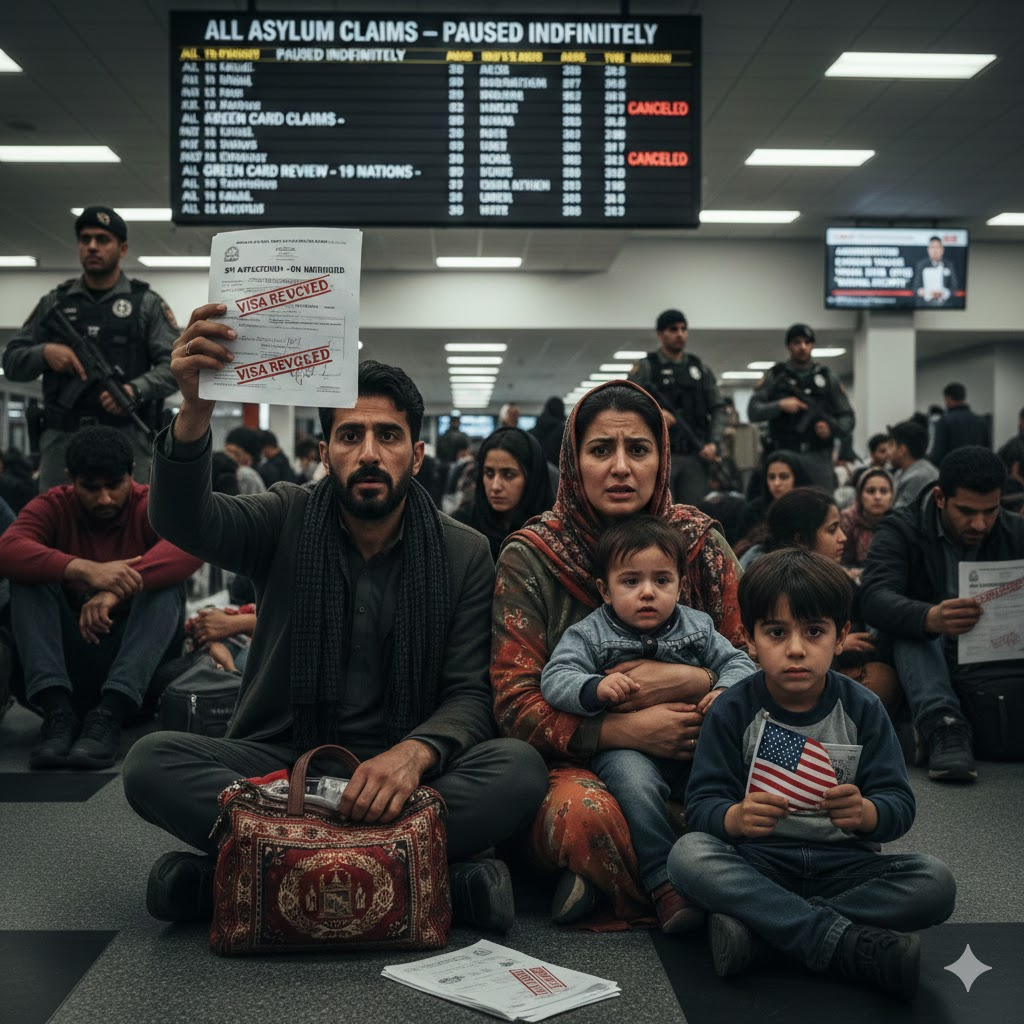
The “Permanent Pause” The President declared a “permanent pause” on migration from “third-world countries.” While the White House has not yet released an official list, administration officials point to a June 2025 executive order that identified 19 “countries of concern” (including Afghanistan, Venezuela, and Haiti) as likely targets.
Ending Federal Benefits Perhaps the most significant domestic shift is the proposal to end all federal benefits and subsidies for non-citizens.
- Who this affects: This would likely target not just undocumented immigrants, but potentially legal permanent residents (green card holders) who currently access programs like SNAP or Medicaid.
- “Reverse Migration”: The President explicitly used this phrase, signaling a goal of reducing the overall foreign-born population in the U.S., regardless of legal status.
3. The Analysis: A Legal and Political Firestorm
Legal experts and civil rights groups are already preparing to challenge these directives, arguing they may violate the Constitution’s due process and equal protection clauses.
- Legal Hurdles: “You cannot simply strip benefits from legal residents by tweet,” says one constitutional law expert. Courts have historically held that legal residents are entitled to equal protection under the law. We expect immediate lawsuits from groups like the ACLU, similar to the challenges filed against the administration’s “One Big Beautiful Bill” earlier this August.
- Political Implications: For the President’s base, this is a fulfillment of a core campaign promise to prioritize “American safety first.” For Democrats and immigration advocates, it’s viewed as a cynical use of a tragedy to push an exclusionary agenda.
- Diplomatic Fallout: The revelation of the suspect’s CIA ties raises uncomfortable questions. Vetting failures are being blamed, but intelligence insiders warn that alienating former allies who fought alongside U.S. troops could damage future intelligence-gathering networks.
The Bottom Line
As Washington returns to work next week, expect the conversation to shift from the tragedy of Spc. Beckstrom’s death to a fierce battle over the definition of American residency. The administration is betting that the public’s demand for security will outweigh concerns over civil liberties—a wager that will now play out in federal court.
What’s Next?
- Monday Morning: We await the official text of the Executive Order to see the specific legal definitions of “third-world countries” and “non-citizens.”
- Congressional Reaction: Will Senate Democrats attempt to block funding for the enforcement of these new rules?
What are your thoughts on the balance between national security and the rights of legal residents? Leave a comment below.





Leave a Reply