
December 2, 2025
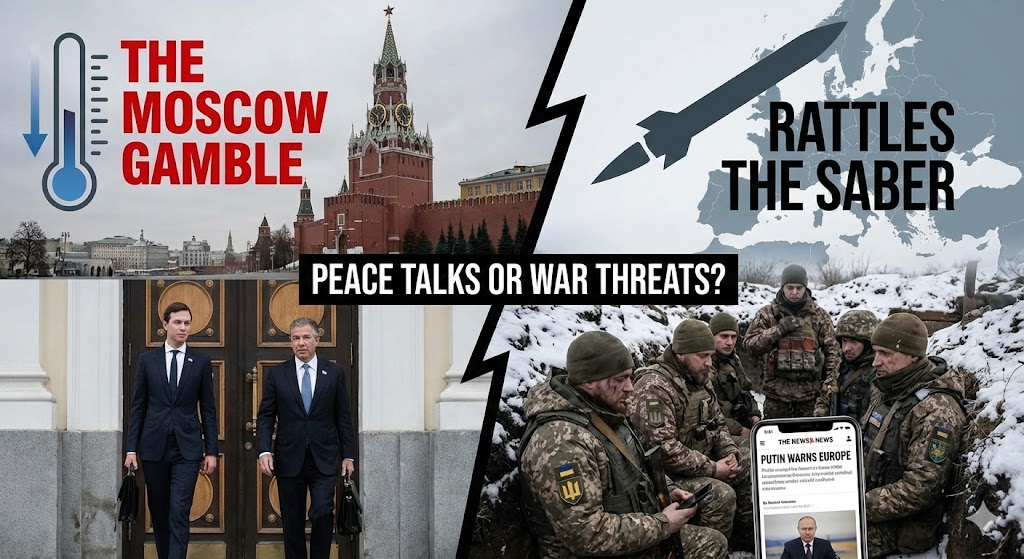
The optics were meant to be triumphant: President Trump’s envoys landing in Moscow to finally broker the “deal of the century” and end the war in Ukraine. Instead, Jared Kushner and Steve Witkoff arrived today to the sound of sabers rattling.
Just hours before these high-stakes talks were set to begin, Vladimir Putin didn’t offer an olive branch; he offered a threat.
In a move clearly timed to overshadow the arrival of the American delegation, the Russian President publicly declared that Russia is “ready” for a wider war if Europe seeks one. He accused European leaders of actively trying to sabotage potential peace deals, effectively drawing a line in the sand before negotiations even started.
This is classic Kremlin statecraft. Putin is setting the stage, making it clear that any “peace” will be dictated on his terms, not Washington’s. By threatening Europe directly, he is attempting to drive a wedge between the Trump administration and NATO allies who are already terrified of what a hastily cut deal might look like.
The View from the Trenches
While diplomats in tailored suits meet in Moscow, the reality on the ground in eastern Ukraine tells a different story.
Reports from the front lines today indicate deep, pervasive skepticism among Ukrainian troops regarding these talks. For the soldiers who have been holding the line, the fear isn’t just continued war—it’s a “bad peace.” They worry that Trump’s eagerness for a quick political win will result in a “frozen conflict,” locking in Russia’s territorial gains and giving Putin a pause button to rearm for the next invasion.
A ceasefire that cements Russian occupation isn’t peace to Kyiv; it’s a slow surrender.
The Transactional Test
This moment is the first major stress test of President Trump’s “transactional” foreign policy in his new term. He has staked significant political capital on his ability to end this war quickly, believing his personal rapport with strongmen can cut through geopolitical knots.
But Putin is signaling that he won’t be charmed into a withdrawal. The danger now is that in the rush for a signed agreement to announce on Truth Social, the administration might agree to terms that disastrously weaken Ukraine and destabilize European security for decades.
The coming days in Moscow will define the geopolitical landscape for the next four years. Trump wants a signature victory. But as today’s rhetoric proves, Putin isn’t interested in helping an American president win a news cycle. He’s interested in winning the long war.



Leave a Reply