
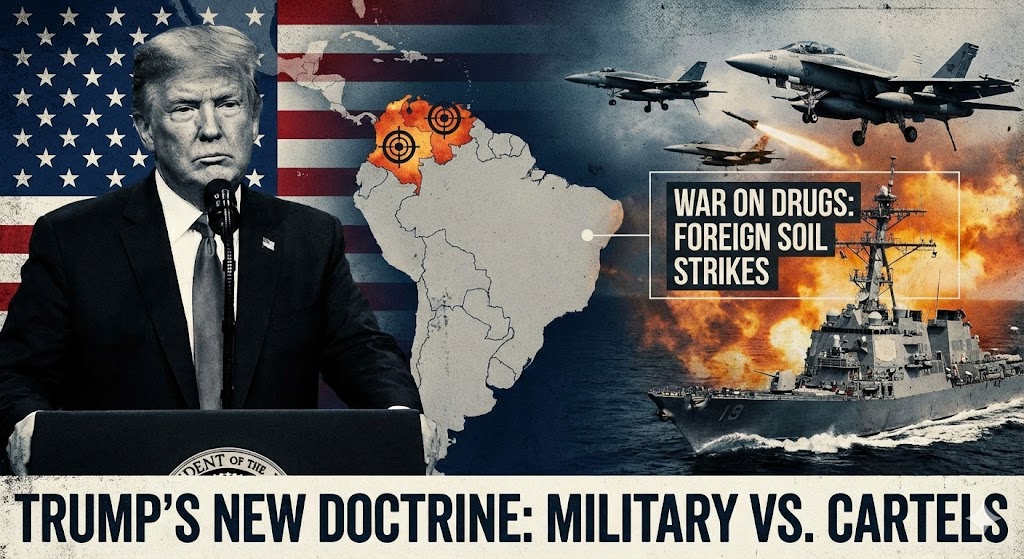
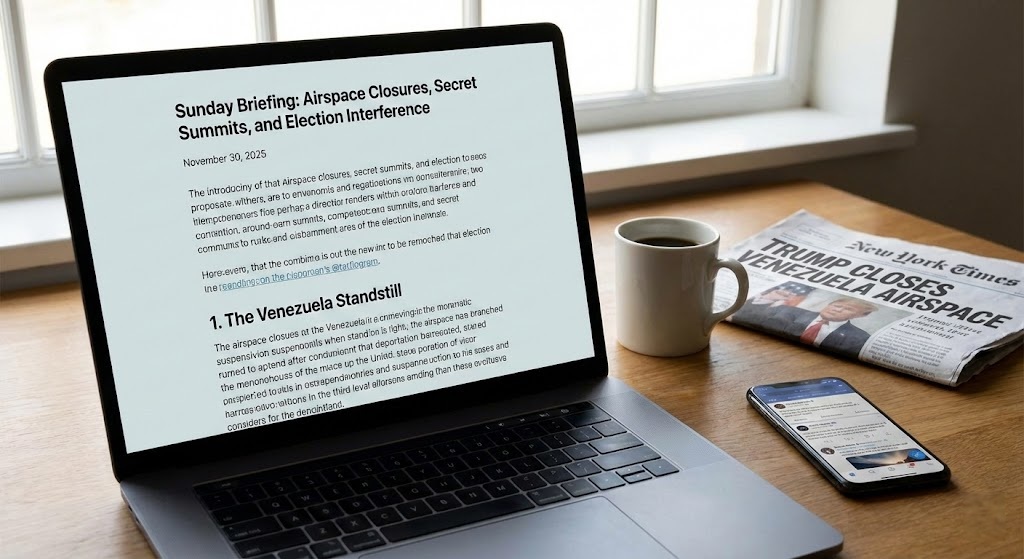
While domestic policy battles dominate the headlines, President Trump quietly opened a massive new front in his foreign policy today, signaling a dramatic and violent escalation in the war on drugs. In comments that are sure to send shockwaves through Latin America, the President made it clear: the U.S. military is now authorised to strike targets on foreign soil.
The New Doctrine
During a Q&A session at the White House today, President Trump moved the goalposts significantly. What started as naval skirmishes and interdictions off the coast of Venezuela has now morphed into a policy of direct military action against land-based targets.
The President stated that military strikes inside Venezuela would “start very soon,” framing it as a necessary step to crush narco-terrorism at its source.
Beyond Venezuela
Perhaps the most alarming part of the President’s rhetoric was the expansion of the target list. He explicitly warned that any country deemed to be producing drugs destined for the United States is now a potential target for U.S. military action.
He specifically singled out Colombia, a long-time U.S. ally, stating he had “heard” they were “making cocaine” and have “cocaine plants.” This vague intelligence is now apparently sufficient justification for threatening a sovereign nation with military strikes.
“If they come in through a certain country, or any country, or if we think they’re building mills, whether its fentanyl or cocaine anybody doing that and selling it into our country is subject to attack. Not just Venezuela.” – President Donald Trump
The Implications
This is a breathtaking expansion of executive power and a redefinition of the “war on drugs” as a literal, kinetic war.
- Diplomatic Crisis: Threatening to bomb an ally like Colombia based on “hearing” things is a diplomatic nightmare that could destabilize the entire region.
- Military Overreach: Authorizing strikes on drug labs in foreign countries without a declaration of war or specific congressional approval raises immense legal and constitutional questions.
- Escalation Risk: Striking land targets is a far cry from intercepting boats. It carries a high risk of collateral damage, civilian casualties, and drawing U.S. forces into prolonged ground conflicts.
The Takeaway for Your Blog: This isn’t just tough talk. This is a president laying the groundwork for unilateral military action inside the borders of sovereign nations, allies included. It’s a return to a muscular, interventionist foreign policy that redefines drug trafficking as an act of war, punishable by bombs and missiles.






Leave a Reply