
December 2, 2025
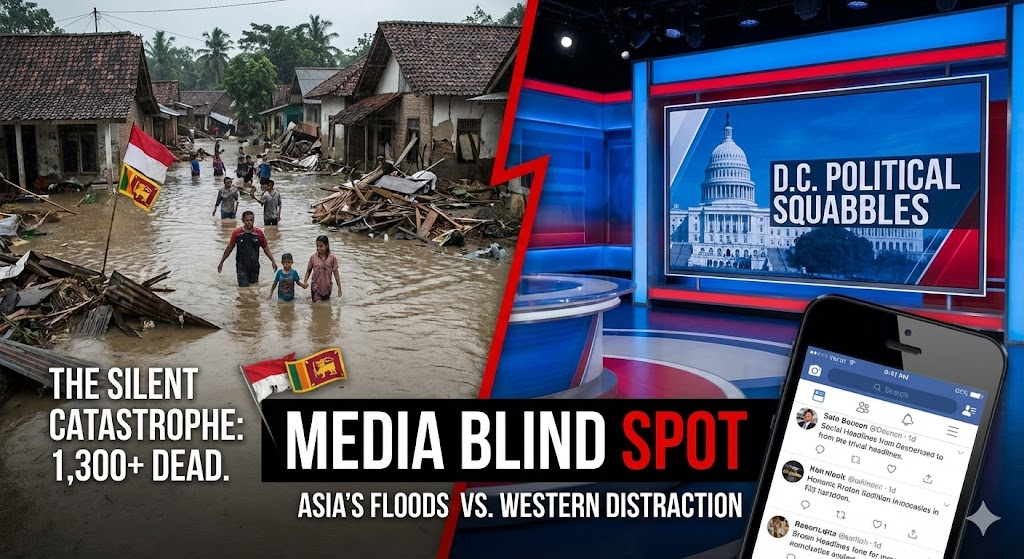
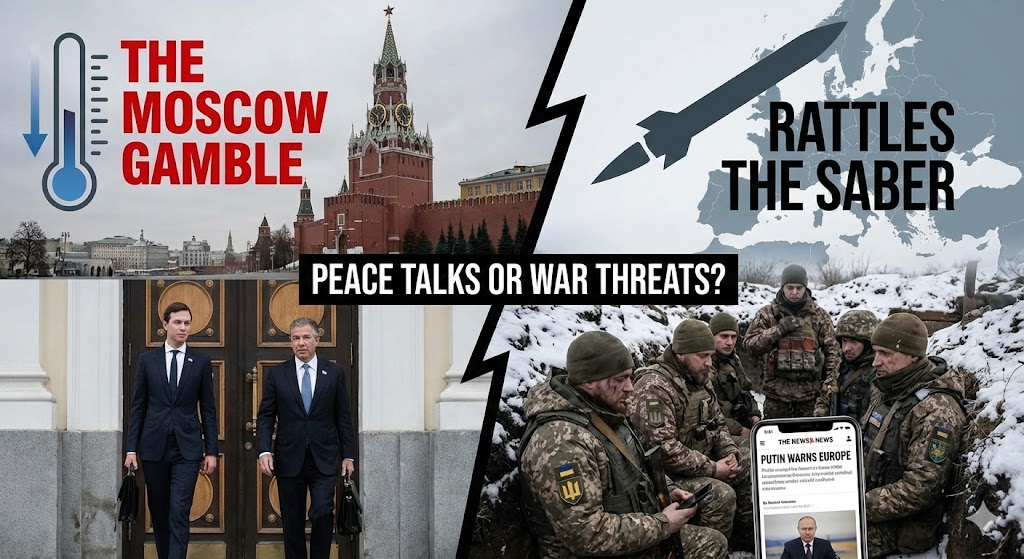
While the American news cycle is consumed by political brinkmanship in Washington and high-stakes diplomacy in Moscow, a staggering humanitarian disaster is unfolding on the other side of the world with barely a whisper in Western media.
Across Southeast Asia, a crisis of immense proportions has hit, leaving a death toll that should be front-page news everywhere.
The Scale of the Disaster
“Cyclone Senyar” has wreaked havoc across Indonesia, Thailand, and Sri Lanka over the past few days. The numbers are horrifying and continue to climb. As of today, reports indicate that more than 1,300 people have died due to catastrophic flash floods and landslides triggered by the relentless storm.
Entire villages have been washed away. Thousands are displaced, their homes buried under mud and debris. Rescue efforts are being hampered by continued bad weather and destroyed infrastructure, leading to fears that the final count will be significantly higher.
A Man-Made Force Multiplier
This isn’t just a story about bad weather. UN experts came forward today to frame this disaster not as a purely “natural” event, but as a deadly consequence of human policy.
They are pointing directly to rampant deforestation in the region as a massive “force multiplier” for the devastation. Without forests to absorb the heavy rainfall, the water rushes down hillsides, carrying soil, trees, and eventually, entire communities with it. It’s a stark, tragic real-world example of how environmental mismanagement and climate change are combining to create deadlier disasters that disproportionately hit the world’s poorest populations.
The Media’s Blind Spot
For a political blog, the question isn’t just what happened, but how it’s being covered. The disparity is jarring. We have wall-to-wall coverage of cabinet meeting doodles and political maneuvering over SNAP benefits, while the deaths of over a thousand people are relegated to a news ticker at the bottom of the screen.
This “silent catastrophe” highlights a persistent blind spot in Western media. A political squabble in D.C. is treated as an existential crisis, while a literal existential crisis claiming countless lives in the Global South is treated as a footnote.
This disaster demands our attention not just for humanitarian reasons, but because it is a flashing red warning sign about the future of climate instability and its human cost. Ignoring it won’t make the waters recede.



Leave a Reply